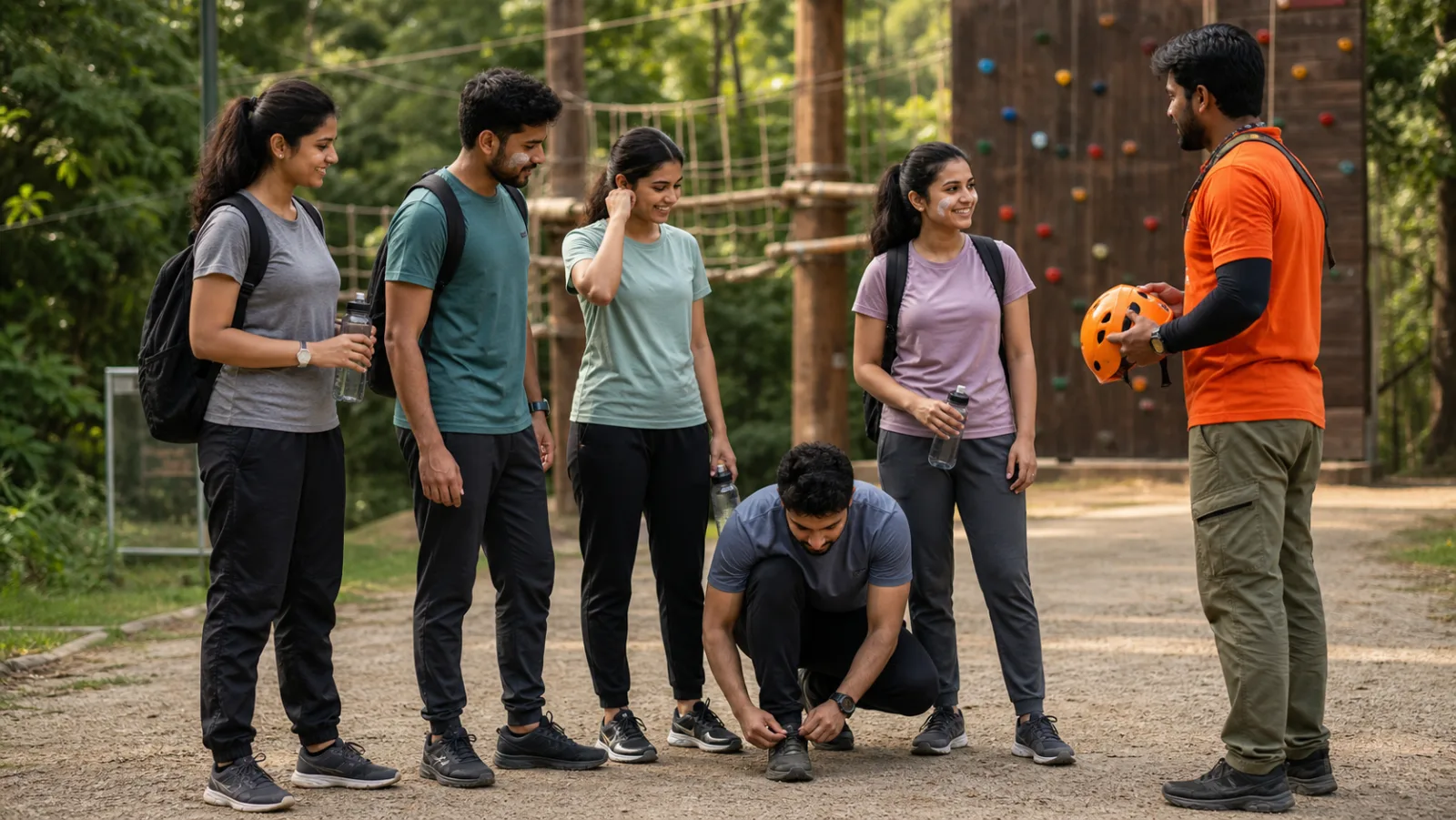

What to Wear to an Adventure Park
At a glance
- Best shoes: Closed-toe, laced, grippy
- Best clothes: Breathable and close-fitting
- Leave home: Loose jewellery and heels
An adventure park outfit is safety equipment’s quiet partner. Your clothes should let you bend, step and reach without catching on obstacles; your footwear should stay secure; and your accessories should not interfere with helmets or harnesses. You do not need specialist clothing—just practical choices.
Quick answer
Wear a breathable T-shirt, joggers or flexible track pants, and closed-toe sports shoes with tied laces. Tie back long hair, remove dangling jewellery and carry a light weather layer. Follow the venue’s instructions for activity-specific helmets, harnesses and loose items.
The ideal adventure park outfit
| Body area | Wear this | Avoid this |
|---|---|---|
| Top | Breathable T-shirt or athletic top | Loose scarves, open fronts, very baggy sleeves |
| Bottom | Joggers, track pants or flexible trousers | Restrictive clothing, very wide legs, floor-length garments |
| Feet | Secure sports shoes with grip | Flip-flops, heels, loose sandals |
| Hair | Long hair tied low and securely | Loose hair near helmets, ropes or moving parts |
| Accessories | Minimal, secure essentials | Dangling earrings, chains, bangles and loose watches |
Choose clothes for movement, not just photos
Breathable, quick-drying fabrics are comfortable during active outdoor sessions. The fit should be close enough not to snag but not so tight that it restricts a squat, long step or overhead reach. Before leaving, try these three movements: raise both arms, take a deep lunge and sit comfortably. If the outfit rides up, pulls or slips, change it.
Stretch jeans can be acceptable for gentle activities, but they are often warmer and slower to dry than track pants. Avoid torn knees, metal decorations and wide hems where a harness or obstacle may rub.
Footwear: the one choice not to compromise
Sports shoes should fully cover the toes and heel, fit securely and have usable tread. Tie laces with a double knot and tuck long ends away. New shoes can create blisters, so wear a familiar pair rather than breaking in footwear on activity day.
Flip-flops and open sandals may fall off, expose the foot or reduce traction. Even if they are comfortable for the drive, carry proper activity shoes. Some experiences can have their own footwear rules, so the instructor’s direction always takes priority.
Dress for Delhi NCR weather
Warm months
Choose light colours, breathable fabric and sun protection. Carry a cap for rest periods, but remove it if instructed before wearing a helmet. Reapply sunscreen and hydrate regularly; clothing does not replace heat precautions.
Monsoon
Use quick-drying clothes and shoes with dependable grip. Carry a dry change of clothes in a sealed bag. Activity availability can change with rain, wind and surface conditions, so confirm the venue’s weather policy.
Winter
Use removable layers: a breathable base, a light sweatshirt or fleece, and a compact outer layer if necessary. Avoid long mufflers or loose shawls during activities. You should be able to remove a layer once you warm up.
Hair, glasses, phones and jewellery
Tie long hair low enough to fit comfortably with a helmet. Secure prescription glasses with a suitable strap if the venue allows it. Phones, wallets and keys should be placed in a secure locker or designated storage before climbing, riding or using a harness—never rely on a shallow pocket.
Remove dangling jewellery and loose religious or fashion accessories where practical. If an item cannot be removed, tell the instructor before the activity so they can assess whether it interferes with equipment.
What children should wear
Use the same principles with a few additions: label the child’s bottle and extra layer, pack a full change of clothes, avoid decorative cords, and make sure the child can tie or secure their own shoes—or that an adult checks them before each activity. Clothing should allow instructors to fit protective equipment properly.
Printable packing checklist
- Closed-toe sports shoes
- Breathable T-shirt
- Flexible trousers
- Refillable water bottle
- Sunscreen
- Hair ties
- Change of clothes
- Personal medicines
- Small towel or tissues
- Weather layer
Safety gear comes from the operator
Do not substitute your own casual cycling helmet or improvised equipment unless the activity operator explicitly approves it. Use the helmet, harness and safety briefing provided for that specific activity, and ask for a refit if anything feels loose, twisted or uncomfortable.
Frequently Asked Questions
Stretch jeans can work for light activities, but breathable joggers or track pants usually move and dry better. Avoid rigid, baggy or torn jeans around harnesses.
Closed-toe sports shoes with secure laces are the safer default. Sandals, heels and flip-flops may not be permitted for specific activities.
Use breathable fitted clothing, secure sports shoes, tied-back hair and minimal accessories. Carry a labelled change of clothes.
Store phones and other loose items whenever the operator asks. A dropped device can endanger you or people below.
Related Guides
Know before you arrive at Veda
Check current activity requirements, age or height limits and pass inclusions with the park team. Closed-toe shoes and practical activewear are the best starting point.