
How to Plan a Group Day Outing
At a glance
- Start: 2–4 weeks ahead
- Control: One source of truth
- Confirm: Everything in writing
Planning for ten people is not the same as planning for two. Every uncertain detail multiplies: Who is coming? Who paid? Which pickup point? Is lunch included? A good group outing plan turns those questions into a single timeline and gives participants only the information they need at the right moment.
Quick answer
Define the purpose, budget and date; collect one final headcount; compare venues on facilities rather than photos; confirm inclusions and cancellation terms in writing; assign group leads; then send a one-page final brief 48 hours before departure.
The group outing planning timeline
| When | Decisions | Output |
|---|---|---|
| 3–4 weeks before | Purpose, date options, budget, area | Short brief and organizer |
| 2–3 weeks before | RSVPs, venue, transport | Provisional headcount and quote |
| 1 week before | Food, activity groups, payment | Confirmed booking |
| 48 hours before | Weather, route, contacts | Final participant message |
| Day of outing | Check-ins, headcounts, breaks | Safe, on-time flow |
1. Define what success looks like
A corporate team may want participation and bonding. A school needs age-appropriate activity, supervision and safe movement. A family group may prioritize flexibility and rest. Write the goal in one sentence; it will help you reject venues that look attractive but do not fit.
Set a realistic per-person ceiling that includes transport, taxes, tickets, food and a buffer. Do not announce a low “starting price” to participants before obtaining a complete quotation.
2. Build one source of truth
Use one form or sheet, not a long message thread. Record the participant’s name, phone, pickup point, confirmed status, payment status, dietary needs, accessibility needs and emergency contact. For minors, follow the school or organization’s consent and safeguarding process.
Set a clear RSVP deadline and explain that late changes depend on venue and transport capacity. Keep sensitive information accessible only to the people who need it.
3. Compare venues on operational details
- Real travel time
- Group capacity
- Clean washrooms
- Bus or car parking
- Shade and seating
- Food handling
- First-aid process
- Rain/heat backup
- Activity age limits
- Cancellation terms
Ask for current photographs or a site visit if the group is large. If choosing an adventure park, clarify whether activities rotate in batches and how participants who opt out will be accommodated.
4. Get a complete quotation
The written quote should include the date, tax, minimum billing headcount, inclusions, separately charged activities, food menu or meal scope, complimentary entries, payment dates, rescheduling terms and the venue contact. Ask what changes if the final headcount moves up or down.
At Veda Adventures, public prices cover defined passes and separately priced experiences. Group, school and corporate arrangements can differ, so request a date-specific proposal through the appropriate service page rather than calculating a group total from public tickets.
5. Plan transport backwards from check-in
Start with the venue’s required arrival time, subtract a realistic travel duration, then add boarding and traffic buffer. Use as few pickup points as practical. Share a map link, driver or coordinator number, vehicle details and the time after which the vehicle must leave.
Assign one transport lead per vehicle and make that person responsible for headcounts—not for guessing who might arrive independently.
6. Build a humane schedule
Do not fill every minute. Alternate high-energy and low-energy blocks, include hydration and washroom breaks, and state a final regrouping time. Mixed groups need parallel choices: an activity path and a lighter participation or rest path.
A practical full-day flow is arrival and briefing, first activity block, break, second activity block, lunch, lighter games or free time, group photo, final headcount and departure.
7. Send a one-page participant brief
Send it 48 hours before the outing. Include date, pickup and departure time, map, coordinator number, clothing, footwear, what to carry, what not to carry, meal information and the weather plan. Ask participants to respond only if a listed detail is wrong—this exposes mistakes before the day.
8. Run the day with visible leadership
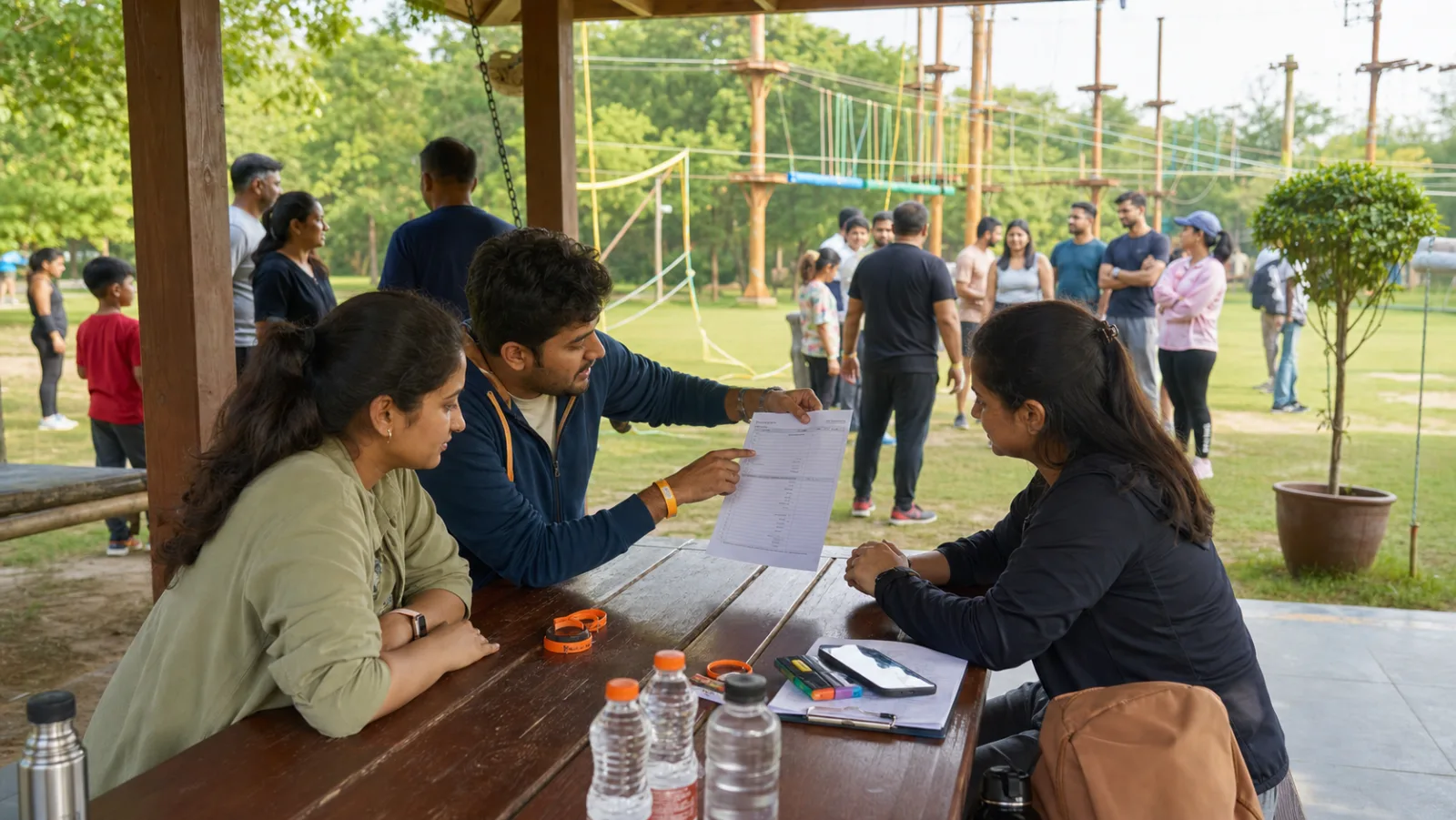
Use coloured wristbands, small groups or named leads where useful. Take headcounts at departure, arrival, after lunch and before return. Introduce the venue coordinator, point out washrooms and first aid, and tell everyone exactly where and when to regroup.
Planning for bike rider groups
A riders’ group needs two connected plans: a disciplined road journey and a relaxed venue day. Name a ride captain and a sweep rider, split a large convoy into smaller pods, and publish fuel, breakfast and regroup points before departure. Every rider should carry the documents required for their vehicle, wear an appropriate helmet and protective gear, check tyres and fuel, and agree that the outing is not a race on public roads.
- Ride captain and sweep named
- Smaller pods for large groups
- Live route checked that morning
- Fuel and tyre check
- Emergency contact shared
- No alcohol before the return ride
- Helmet and jacket storage confirmed
- Separate on-site activity briefing
Choose a venue with straightforward parking, washrooms, hydration and a clear arrival point. Staggering pods by a few minutes can reduce congestion at the gate. Once parked, road experience does not replace the safety briefing for ATV, ropes or any other activity. For an early-start route idea, see our guide to morning cafés for bikers in Noida, then verify opening hours and road conditions on the day.
Final 48-hour checklist
- Headcount locked
- Payment confirmed
- Weather checked
- Venue reconfirmed
- Transport reconfirmed
- Participant brief sent
- Emergency contacts saved
- Group leads assigned
Frequently Asked Questions
Begin two to four weeks ahead for a normal group. Large school or corporate groups, peak weekends and special slots can need more lead time.
Attendance, phone, pickup point, dietary and accessibility needs, emergency contact and venue-required activity limitations.
Offer different intensity levels, accessible facilities, rest time, clear food choices and no pressure to do every activity.
Date, group size, taxes, inclusions, meals, limits, complimentary entries, payment milestones, cancellation and weather terms.
Use a ride captain and sweep, split large convoys into pods, agree on legal and sober riding rules, check fuel and tyres, share regroup points and confirm secure storage for helmets and jackets.
Related Guides
Planning a group day at Veda?
Share your group type, headcount, date and objectives. The team can help you confirm activity flow, current options and group arrangements.